

São Tomé and Príncipe: Africa's Most Affordable Passport — and the Archipelago Behind It
A small island nation in the Gulf of Guinea has quietly entered the global citizenship-by-investment market with a programme that undercuts every Caribbean rival on price and speed. But the real story may be the destination itself.
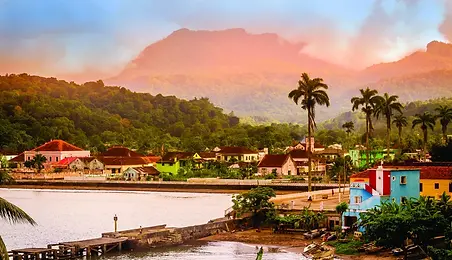
SÃO TOMÉ, Gulf of Guinea — Straddling the equator in the warm waters off Central Africa's Atlantic coast, São Tomé and Príncipe has long occupied a curious position in the global imagination: too remote for mass tourism, too small for geopolitical consequence, yet possessed of a lush, volcanic beauty that has earned it the sobriquet the "Galápagos of Africa." In August 2025, however, this former Portuguese cocoa colony of some 219,000 people took a step that placed it firmly on the radar of a very different audience — the world's high-net-worth individuals shopping for a second passport.
The archipelago's Citizenship by Investment programme, formally launched on 1 August 2025 under Decreto-Lei n.º 07/2025, is structured around a single, simple proposition: a non-refundable donation to the National Transformation Fund, starting at US $90,000 for a single applicant, with no residency requirement, no language test, no interview, and no obligation to set foot on the islands. For a family of up to four, the contribution rises modestly to US $95,000 — still lower than the entry price of every comparable Caribbean programme. Processing times, according to the government's Citizenship Investment Unit, typically run between four and ten weeks, with the fastest recorded approval completed within a single month.
A Newcomer That Set Records at Launch
The programme's debut statistics are, by the standards of the industry, striking. Between the opening of applications in September 2025 and January 2026, the CIU received 98 applications and issued its first passports — 27 approvals in total — within that five-month window. Early applicants came predominantly from Germany, India, Russia, China, and Nigeria, a mix that reflects both established demand from emerging-market investors seeking mobility diversification and tentative interest from European and Asian markets. The programme generated more than US $2.5 million for the National Transformation Fund within its first two months of accepting applications.
The legal architecture is relatively straightforward. Nationality Law No. 07/2022, enacted four years before the CBI rules came into force, and the subsequent Decree-Law 07/2025 together provide the framework for granting citizenship to investors. São Tomé and Príncipe permits dual nationality — a significant draw — though applicants holding three or more existing citizenships are currently ineligible. Citizenship acquired through the programme is permanent and inheritable by future generations. Passports are ordinary documents, identical to those issued to São Tomense nationals by birth, valid for seven years for adults and three years for minors, and renewable at the country's embassies in Beijing, Brussels, and Lisbon, or directly through the CIU's Dubai office.
One structural curiosity worth noting: the CIU itself is headquartered not in São Tomé but in Dubai, under an exclusive ten-year management agreement with the firm Passport Legacy. The arrangement was a deliberate strategic choice, leveraging the UAE's infrastructure and time-zone centrality to streamline processing. Applications are submitted through a network of licensed marketing agents — not directly by individuals — and are subject to a non-refundable US $5,000 submission fee in addition to the Fund contribution.

What the Passport Unlocks — and What It Does Not
Prospective applicants should approach the passport's travel benefits with calibrated expectations. The São Tomense passport currently provides visa-free or visa-on-arrival access to roughly 60 to 90 destinations, depending on the source consulted — a figure that reflects the ongoing expansion of the country's diplomatic agreements. Key accessible markets include South Africa, Singapore, Hong Kong, Brazil, Malaysia, and a significant number of African nations.
The passport does not, at present, grant visa-free entry to the Schengen Area, the United Kingdom, or the United States — a limitation shared by most African passports and by several lower-cost Caribbean programmes. For investors whose primary objective is unrestricted European mobility, the São Tomense passport is unlikely to be a standalone solution.
Where it finds its strongest commercial logic is in African regional access. São Tomé and Príncipe is a member of the Economic Community of West African States (ECOWAS), whose protocol grants citizens free movement rights — including the right to reside and establish businesses — across all 15 member states, among them Nigeria, Ghana, Senegal, and Côte d'Ivoire, a combined market of over 400 million people. The country is also a founding member of the Community of Portuguese Language Countries (CPLP), conferring preferential status in markets spanning Portugal, Brazil, Angola, Cape Verde, and Mozambique. For investors with commercial ambitions in Lusophone Africa or in the Gulf of Guinea basin more broadly, those affiliations carry tangible weight.
The tax implications are also notable. São Tomé does not levy tax on global income unless an individual becomes a tax resident — a status that requires physically spending 183 or more days per year in the country. For most CBI investors, that threshold is never triggered.
In April 2026, the CIU issued a memorandum announcing three simultaneous refinements to the programme's operating procedures, including clarifications around a three-nationality restriction and the introduction of remote passport issuance — allowing approved citizens to receive their documents without travelling to São Tomé or to a consular office.
The Island Chain Itself: A Nation Designated Entirely as a UNESCO Biosphere Reserve
To focus exclusively on the passport's utilitarian merits would be to miss a more remarkable dimension of this story. In 2025, UNESCO extended its biosphere reserve designation to cover the entirety of São Tomé — making it the first whole nation on earth to receive that status. The archipelago hosts 27 endemic bird species found nowhere else on the planet and has earned comparisons to the Galápagos for the density and distinctiveness of its wildlife. Its tropical rainforest is ranked second among Africa's 75 forests by importance for bird conservation.
Cocoa production, which accounts for 54 percent of export revenue, sustains the islands' historical identity as the "Chocolate Islands." The CECAB cooperative coordinates around 3,000 small-scale cocoa farmers producing organic, fair-trade, and premium cacao for international buyers. Proceeds from the National Transformation Fund are directed, in part, toward renewable energy infrastructure — an acknowledgment that a nation of this environmental distinction has particular obligations to its own sustainability.
Crime rates are low, political stability is strong, and the country adopted multiparty democracy in 1990 — among the first African nations to do so. Nigeria sits one hour away by air. Lisbon is six hours and forty minutes.
Getting There: Air Access to São Tomé International Airport (TMS)
São Tomé International Airport (IATA: TMS) is the archipelago's sole international gateway, located on the main island outside the capital. A domestic service connects TMS to Príncipe Island Airport (PCP), operated by Afrijet and STP Airways.
As of mid-2026, five airlines serve the airport, operating non-stop routes to five international destinations:
From Europe: The primary hub connection is Lisbon (LIS), served by two carriers — TAP Portugal (Star Alliance member) and the national flag carrier STP Airways — with approximately three departures per week on each direction. Flight time is six hours and forty minutes. Lisbon remains the most practical European entry point for onward connections to Africa or the Americas.
From West Africa: ASKY Airlines, the Lomé-based pan-African carrier, operates connections from Accra (ACC, Ghana) and from Libreville (LBV, Gabon), the latter also served by Afrijet. These routes provide the principal links to the broader West and Central African air network.
From Southern Africa: TAAG Angola Airlines operates flights from Luanda (LAD), offering an additional African connection, particularly useful for those routing through Angola's capital.
There are currently no direct flights to São Tomé from the United States, Canada, Asia, the Middle East, or anywhere in Latin America beyond Brazil (accessible via Lisbon connections). Travellers from East Asia, the Gulf, or North America will typically route through Lisbon — connecting from Doha, Dubai, or major European hubs — or through Luanda and Accra for intra-African itineraries.
Passport holders wishing to renew travel documents may do so at the country's embassies in Brussels (convenient for European residents), Lisbon, or Beijing, or remotely through the CIU office in Dubai — a practical arrangement for an investor community that is, by design, globally dispersed.
Positioning in the Global CBI Landscape
The São Tomé programme entered a market long dominated by Caribbean stalwarts. Dominica's CBI programme — one of the most established in the world — begins at US $200,000 and offers visa-free access to approximately 150 countries including the Schengen Area. St. Kitts and Nevis, the oldest programme in the Caribbean, starts at a similar level. Nauru's Pacific programme offers access to 101 destinations including the UAE, Hong Kong, and Singapore, starting at US $105,000.
São Tomé undercuts all of these on price, and matches or outpaces most on processing speed. Its passport provides fewer high-value destinations, and the absence of Schengen access is a real constraint for some profiles. Consultants in the residence and citizenship industry have begun positioning it primarily as a cost-effective African mobility solution — valuable for investors who conduct business across the continent, hold existing EU or North American citizenship, or are seeking a fast, affordable second passport as a strategic hedge rather than a primary travel document.
Whether São Tomé and Príncipe's programme matures into a durable fixture of the global market — as Dominica and St. Kitts have done over decades — or faces the policy volatility that has troubled newer entrants elsewhere will depend in large measure on the stability of its governance framework and the quality of its due diligence. The signs, at an early stage, are encouraging. The programme has operated transparently, published its legal instruments in the official gazette, and structured its CIU around established private-sector expertise. The first 27 passports were issued on schedule.
For now, the world's most affordable citizenship programme belongs to an equatorial archipelago better known for endemic birds and fine chocolate than for investor visas. That, in itself, is not the least interesting thing about it.
